
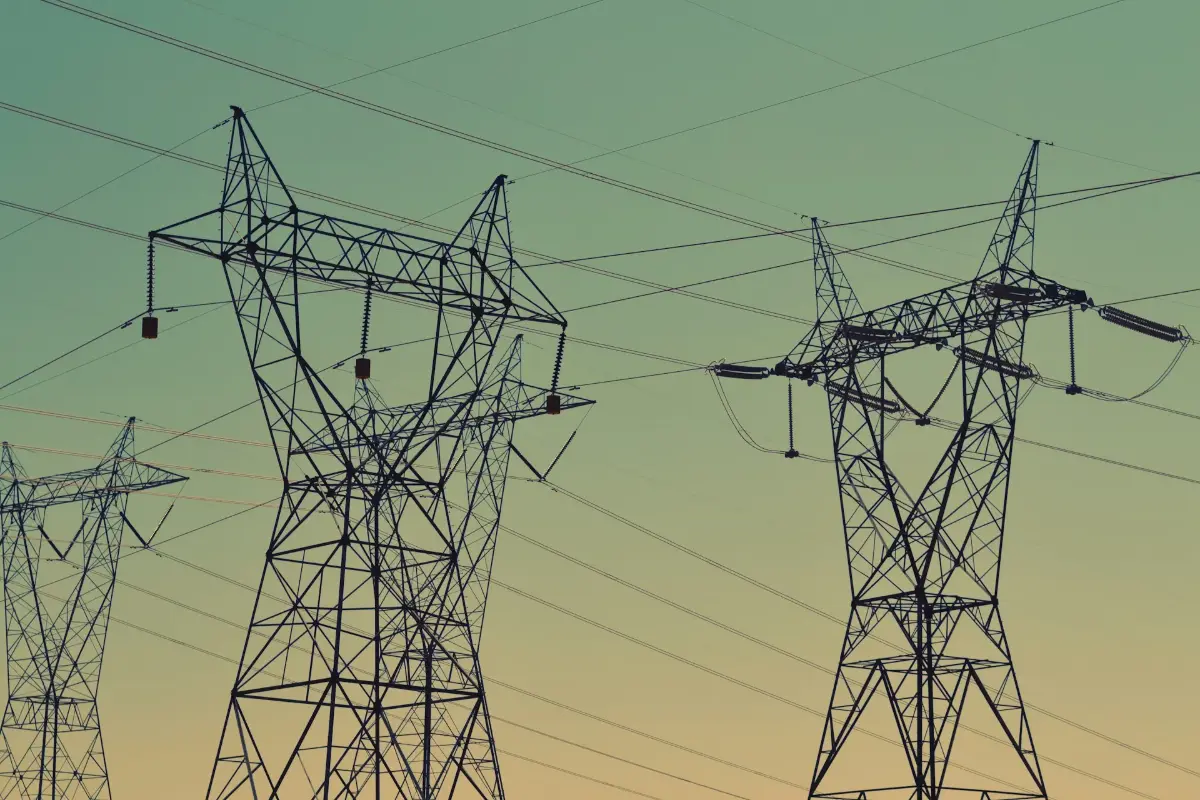
On 8 October 2026 the Austrian daily Die Presse published a guest commentary by Andreas Greilhuber, our Head of Growth. The title, Das Netz, das mitdenken muss, means roughly “the grid that has to think too”. His question: before we build new power infrastructure, how much more can the existing grid deliver?
Nine billion euros, and an overlooked quantity
Andreas opens with the scale of what is planned. Austrian Power Grid intends to invest nine billion euros in expanding and modernising Austria’s high-voltage grid by 2034, because wind and solar power do not necessarily arrive where and when electricity is needed. New lines, substations and transformers will be necessary — but, he argues, perhaps not all of them at once. Between the capacity a grid needs on paper and the infrastructure that actually has to be built sits a quantity that is often underestimated: how efficiently the existing grid is run.
More capacity without a new kilometre of line
Grids are planned with reserves for critical situations, and for good reason. The flip side is that lines and transformers cannot use all of their possible capacity all the time. If smarter control lets an existing line run closer to its real limit, more often and still safely, its effective capacity rises without anything being built — and the same goes for transformers, substations and distribution grids. As an early example he cites the Italian energy group Enel, where AI-based systems simulate grid situations and optimise control decisions in a complex distribution grid.
Not an argument against building
The commentary is clear that Austria will need new infrastructure. Using existing assets better does not cancel those investments; it defers them. Capital is committed later, and time is gained for permitting, for new technology and for a clearer view of how generation and demand develop. That matters to everyone, because the cost of grid expansion ends up in grid tariffs, and so on the bills of households and companies.
Why we share it
This is the thinking behind FLEX: find the capacity a grid already has before reinforcing it, and measure every gain against a baseline. Andreas also writes from close range — as the author note in Die Presse mentions, his family runs a hydropower plant and a distribution grid in Tyrol.
The full commentary (in German) is available on diepresse.com via the link below.